Quick answer
The PDF’s main route is four days: Lhasa → Basum Tso → Niyang River → Kading Valley → Bayi; the Yarlung Tsangpo Grand Canyon and Namcha Barwa; Lulang and the ancient cypress forest; then Nanyi Valley and Lamaling Monastery. It separately gives a two-day Bomi route and a six-day Motuo trek outline.
- 4 days: the detailed Nyingchi route, preserved in its printed day order.
- 2 days: a separate 318 route from Midui Glacier to Bomi, then Bomi → Lulang → Bayi.
- 6 days: a historical Motuo trek outline. This is not a current trail recommendation; confirm official access, safety and qualified local support first.
- Food in the PDF includes Lulang stone-pot chicken, Tibetan fragrant pork, Barhe River fish and Mêdog stone-pot mushroom soup; two clean food photos are included.
- Main source itinerary
- 4 days · route outline only
- Separate alternatives
- 2-day Bomi route · 6-day Motuo trek outline
- Food photos
- Stone-pot chicken · Tibetan fragrant pork
- Publication
- PDF route outline · verify current details
How many days to spend
The PDF contains different trip shapes, not one itinerary to compress: a four-day Nyingchi route, a separate two-day Bomi route and a separate six-day Motuo trek outline. Choose one based on current access, weather, transport and your pace.
- 4 days: Use the detailed source route through Basum Tso, Bayi, the Yarlung Tsangpo Grand Canyon, Lulang, Nanyi Valley and Lamaling Monastery, after checking current feasibility.
- 2 days: Choose the separate Midui Glacier → Bomi → Lulang → Bayi outline only if current road, access and return arrangements support it.
- 6 days: The PDF’s Motuo trek outline is historical and hazardous; do not treat it as an approved or current trail plan.
Where to stay
The source route uses Bayi (Nyingchi’s urban area) as a base for some outings and names overnight stays farther along the route. Compare current accommodation with the stops and confirmed return transport; the PDF’s named properties, addresses, contacts and rates are not reused.
Best for: A practical starting area for this route outline
This is a broad area suggestion, not a verified hotel recommendation. The supplied PDF contains dated property names, addresses, contacts, and rates; none have been reused. Compare current map locations with your confirmed route and transport plans.
Best time to visit
- No fixed season or month-by-month claim is copied from the older guide. Check the current local forecast and visitor notices for your dates.
- Review holiday crowding, weather alerts, trail or ferry conditions, and any site-specific restrictions before travelling.
Getting around
The source route spans several districts and includes a long first day from Lhasa. Historic public-transport schedules, fares, flight details, road times and vehicle prices are omitted. Confirm the route with current official visitor information, live road conditions and a qualified local operator where appropriate.
- Verify the entire route and each overnight, not just the first transfer.
- For the Grand Canyon, use approved operating routes and formally opened visitor areas only.
- For the separate Motuo trek, confirm present-day access, weather, trail conditions, support, communications and evacuation plans; do not use the old PDF as field instructions.
Arriving in Nyingchi
Confirm current flights and transfer arrangements against your ticket and current airport notices.
Check current train service and tickets with China Railway 12306; do not rely on historic timetables in the PDF.
Transport notes
Check each transfer and return leg
The PDF’s historic routes are place-order references only. Verify current road conditions, opening/access, weather, overnight stays and return transport before departure.
Places and details in photos

Namcha Barwa at first light

Peach blossoms near Gala Village

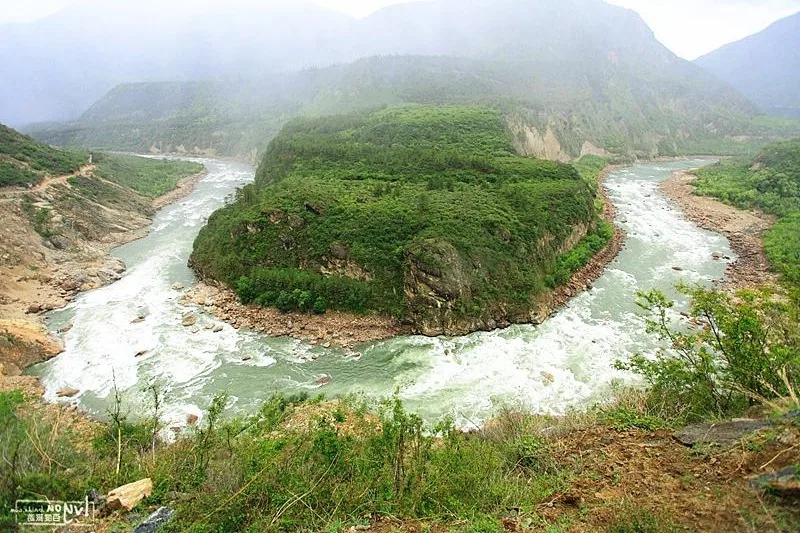
The great bend of the Yarlung Tsangpo

Stone-pot chicken

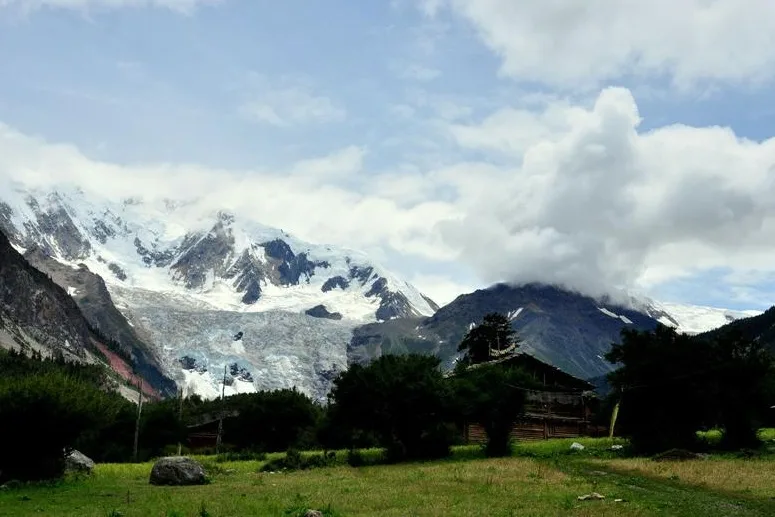
Midui Glacier above the valley

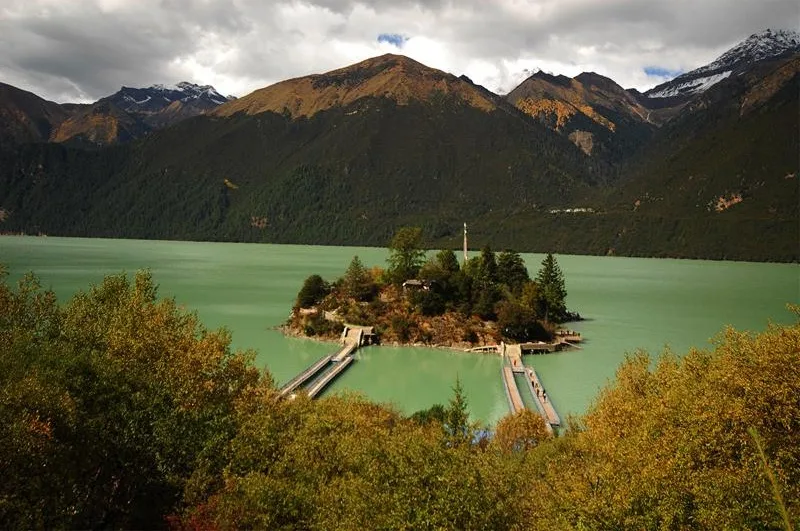
Basum Tso and its wooded island

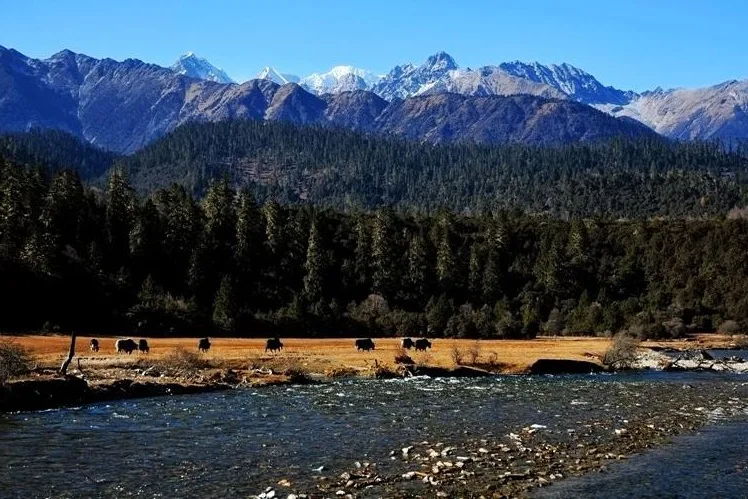
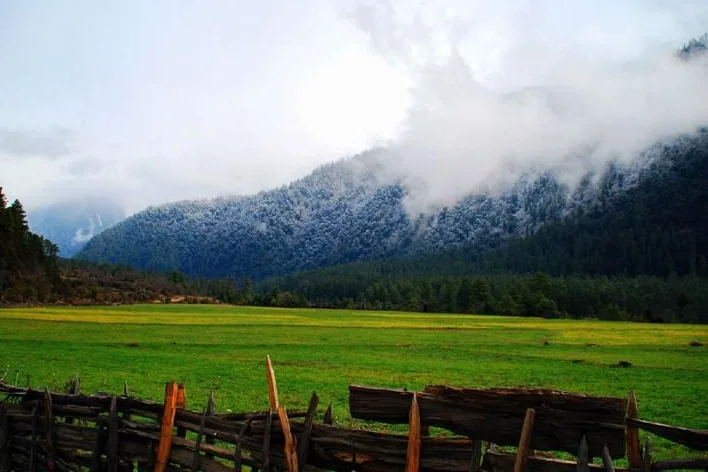
The forested valley at Lulang

Clouds over Bomi’s green valley

A Tibetan fragrant pork dish
Booking and access checks
Recheck canyon access and safety notices
An official visitor notice says canyon-area services and safety coverage apply to approved operating routes and formally opened visitor areas. Check the current operator notice and follow on-site instructions.
The PDF’s four-day Nyingchi route
This follows the source’s four day-by-day groupings. The sequence is preserved as a historic planning outline only; current road times, opening, access and overnight feasibility are not asserted.
- Day 1 · route from Lhasa
Basum Tso, the Niyang River and Kading Valley to Bayi · 拉萨 → 巴松措 → 尼洋河 → 卡定沟 → 八一
The PDF’s first day starts in Lhasa and follows this order to Bayi. It combines several distant stops; verify the present-day route and whether it is realistic in a single day before adopting it.
- Day 2
Yarlung Tsangpo Grand Canyon and Namcha Barwa · 雅鲁藏布大峡谷 → 南迦巴瓦峰
The source pairs the canyon with Namcha Barwa viewing and an overnight in the area. Use only currently approved visitor routes and confirm present-day access and overnight arrangements.
- Day 3
Lulang Forest Sea and the ancient cypress forest · 鲁朗林海 → 巨柏林
Keep both stops in the source’s third-day grouping. Check current opening and transfer feasibility, and adjust the sequence to weather and local notices.
- Day 4
Nanyi Valley and Lamaling Monastery · 南伊沟 → 喇嘛岭寺
The PDF’s final day goes from Nanyi Valley to Lamaling Monastery. Verify current access, local guidance and the onward or return connection before planning both stops.
Separate option: the PDF’s two-day 318 / Bomi route
This is a distinct two-day route in the source, not a shortened version of the four-day Nyingchi plan.
- Day 1
Midui Glacier and Bomi · 米堆冰川 → 波密
The source places Midui Glacier before an overnight in Bomi. Confirm present visitor access, road conditions, weather and where to stay; historical prices and travel estimates are omitted.
- Day 2
Bomi, Lulang and Bayi · 波密 → 鲁朗 → 八一
The source continues from Bomi through Lulang to Bayi. Treat the place order as a reference only; confirm road conditions and whether the transfer fits your actual day.
Historical six-day Motuo trekking outline · not a current trail recommendation
The PDF describes a remote and hazardous trek. This timeline keeps its six-day sequence visible but omits historic distances, costs, access claims and trail instructions. Do not use it as a current route plan; verify official access and organize qualified local support before considering any trek.
- Day 1 · preparation
Bayi to Pai Town: rest and prepare · 八一 → 派乡(休整与准备)
The source’s first day is for reaching Pai Town, resting and preparing. Its old vehicle and supply details are not current guidance.
- Day 2
Pai Town to Lage · 派乡 → 拉格
This is the first walking leg in the historic outline. Current trail access, conditions and support are unverified.
- Day 3
Lage to Hanmi · 拉格 → 汉密
The route order follows the PDF only. Do not rely on its old mileage or estimates.
- Day 4
Hanmi to Beibeng · 汉密 → 背崩
The PDF warns of exposed terrain and weather-related hazards on this section. This guide does not give trail directions; check current official safety and access information.
- Day 5
Beibeng to Motuo · 背崩 → 墨脱
The historic outline continues to Motuo. Confirm legal access, road or trail status, local guidance and a reliable emergency plan before travel.
- Day 6
Motuo to Bomi · 墨脱 → 波密
The source lists Bomi as the final connection. Current transport, road access and onward travel are not verified.
Food mentioned in the PDF
These are food ideas, not restaurant recommendations. Two clean food photographs from the PDF are included; venue names, addresses and historic prices are not.
Lulang stone-pot chicken · 鲁朗石锅鸡
A signature dish highlighted in the supplied guide. Ingredients and preparation vary; check current menus and ask about allergens.
Tibetan fragrant pork · 藏香猪
The source describes this regional pork dish. The photo is from the PDF’s food section; no current restaurant or price is implied.
Barhe River fish · 巴河鱼
Named in the PDF as a local specialty. Availability and preparation depend on the current menu and season.
Mêdog stone-pot mushroom soup · 墨脱石锅菌汤
The PDF mentions mushroom soup prepared in a stone pot. Check ingredients and availability locally.
High altitude, weather and mountain roads
- Some route stops and overnight areas are at high elevation. CDC travel-medicine guidance recommends gradual acclimatization, mild activity during the first 48 hours at altitude, and no further ascent when altitude-illness symptoms are present. Ask a qualified clinician about personal risk before travel.
- An official 2026 Nyingchi spring advisory highlighted rain-related flood and landslide risk in lower southern areas and snow, ice and possible temporary closures on higher routes. Check date-specific weather and road notices rather than relying on the PDF’s old seasonal claims.
- For remote areas, confirm communications, return transport, overnight arrangements and emergency options before departure. Follow local authorities and site staff if conditions change.
Local planning tips
- Keep the PDF’s four-day route, two-day Bomi route and six-day Motuo trek separate; do not merge their days or invent a shortened hybrid.
- The first day of the four-day route starts in Lhasa and strings together several distant stops. Recheck the route and overnight logic before treating it as feasible in one day.
- The source’s Motuo section describes remote, exposed terrain and serious hazards. Its mileage, trail conditions, access and logistics are not validated for present-day travel.
- Nyingchi weather and mountain-road conditions can change quickly. Before spring travel, check current rain, landslide, snow and road notices rather than relying on the PDF’s seasonal statements.
- Food photos from the PDF are included for stone-pot chicken and Tibetan fragrant pork. Barhe River fish and Mêdog stone-pot mushroom soup are listed as text only because the source does not provide a clearly matched usable image for each.
- Restaurant names, addresses, phone numbers, prices, accommodation listings and transport schedules from the supplied PDF are historical and have been left out.
Common planning mistakes to avoid
- Do not merge the source’s four-day route, separate two-day Bomi route and six-day Motuo trek into one shortened or hybrid itinerary.
- Do not assume the Lhasa-to-Bayi first day or any remote-area transfer remains feasible as printed; check current roads, travel times and overnight options.
- Do not enter undeveloped canyon, forest or trekking areas. Follow current official access restrictions and local staff instructions.
- Do not rely on the old PDF’s ticket prices, opening times, accommodation or restaurant listings, telephone numbers, bus schedules or road estimates.
- Do not ascend farther while experiencing altitude-illness symptoms; seek qualified medical guidance for personal health concerns.
How to make the route work
Three source routes need three different timeframes
The PDF contains a four-day Nyingchi route, a separate two-day Bomi option and a separate six-day Motuo trek outline. Keeping them separate preserves the source’s itinerary logic without implying they fit together.
Use the PDF for route shape and dishes, not live operations
Place order, regional food names and the supplied images remain useful context. Current road feasibility, access, weather, lodging, restaurant availability, prices and safety restrictions must come from current official or local information.
Frequently asked questions
Does the PDF give a four-day Nyingchi itinerary?
Yes. It has a four-day route from Lhasa through Basum Tso, the Niyang River and Kading Valley to Bayi; then the Yarlung Tsangpo Grand Canyon and Namcha Barwa; Lulang and the ancient cypress forest; and finally Nanyi Valley and Lamaling Monastery. This guide preserves those four days.
Is the two-day Bomi route part of the four-day plan?
No. The PDF lists it separately: Day 1 Midui Glacier → Bomi; Day 2 Bomi → Lulang → Bayi. It remains a distinct option here.
Does the PDF also include a Motuo trek?
Yes. It gives a separate six-day outline from Pai Town via Lage, Hanmi, Beibeng and Motuo to Bomi. Because the source is old and the route is remote and hazardous, this page does not present it as an approved or current trail recommendation.
Are there food photos in the PDF?
Yes. The guide includes clean photos of stone-pot chicken and Tibetan fragrant pork. The PDF names Barhe River fish and Mêdog stone-pot mushroom soup too, but the selected pages do not provide a clearly matched image for those dishes.
Are the listed prices, restaurant contacts and schedules current?
No. The PDF is an older guide. Its prices, named businesses, phone numbers, timetables and operating details have been left out; confirm current details locally and with official visitor channels.